Ruleti n'Inyigisho z'Imibare
Uruziga rwa ruleti rworohereza kwiyumvira ugushoboka. Ehe ukuntu warukoresha mu cigwa udashishikaje abanyeshure gutega.
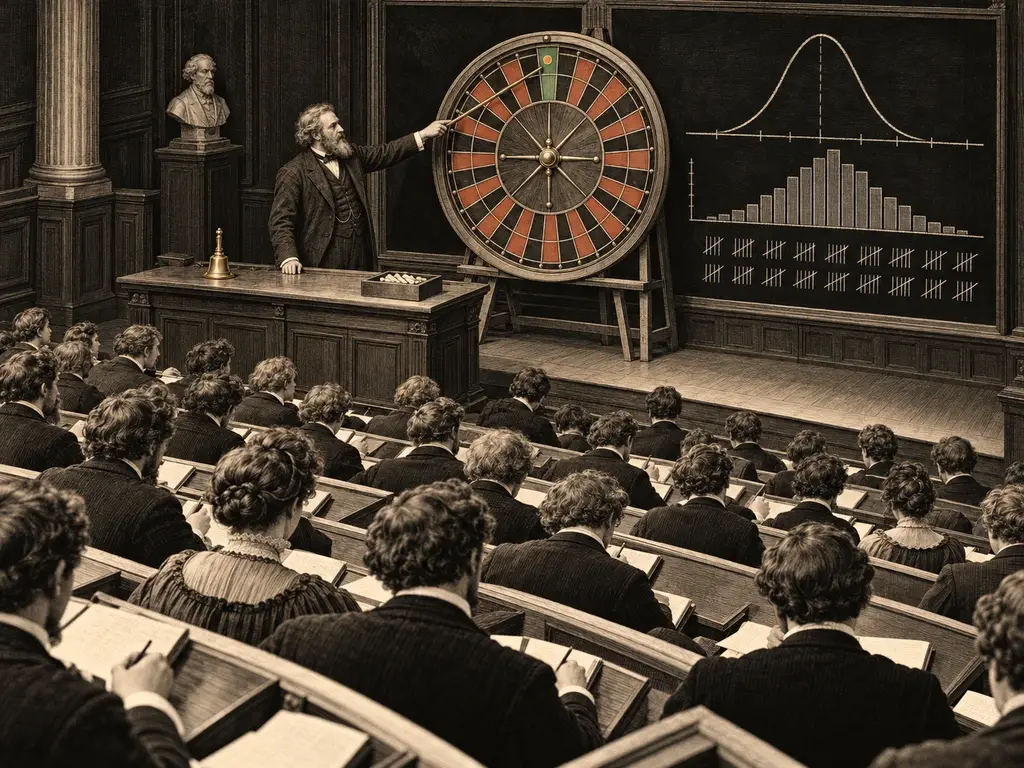
A model with 37 equally likely, independent outcomes connects counting, expectation, varianceimibareIhindagurika ry'IvyavuyemwoIgipimo c'ukuntu ivyavuyemwo bikwiragira kure y'agaciro kitezwe. Kinini kuri straight up, gito ku matego ya rimwe kuri rimwe.Soma vyose →, repeated events and hypothesis testing. State the assumptions, use simulated outcomes without real stakes, and distinguish a mathematical result from a claim about how students learn.
Kubera iki ruleti
A fair single-zerouruzigaZeruAkazu kamwe k'icatsi kibisi kadapfukwa n'itego rya rimwe kuri rimwe, ry'umurwi canke ry'inkingi; ni yo soko y'inyungu ya kazino. Kandi bita: zeru imwe, 0.Soma vyose → roulette model offers 37 outcomes and a convenient payoutamaheraIrihaIvyo itego ritsinze rizana, bivugwa nka “X kuri 1” hiyongereyeko amahera y'itego asubizwa.Soma vyose → formula. It is one example among many: coins, dice and cards can also illustrate probabilityimibareUgushobokaUgushoboka kw'ivyavuyemwo, kuva kuri 0 gushika kuri 1 canke 0% gushika 100%. Inomero imwe: 1/37 = 2,70%.Soma vyose →, repeated outcomes and statistical tests. Drawing cards with replacement gives a different model from drawing without replacement.
Uniformity and independence are assumptions to examine, not properties guaranteed by a wheel’s appearance. For a standard bet covering n numbers and paying 36/n − 1 unitsamaheraIgiceAmahera y'itego y'ishingiro uburyo canke umukinyi akoresha. Iyongerekana ridondorwa mu bice kugira ngo rikore ku meza ayo ari yo yose.Soma vyose → of profit on a win, the expected net result per unit staked is −1/37. Special payouts and zero rules change that result.
Urukurikirane rw'ivyigwa
Utu turorero twibaza ko ivyavuyemwo vyigenga kandi bifise ugushoboka kungana kuri 0–36, kiretse aho bivugwa ukundi.
Kwigisha utigisha gutega
Keep real money out of the activity. A spreadsheet or a set of numbered tokens can reproduce the mathematics without a casino setting. Choose the framing for the learners and the institution; a negative-expectation explanation alone does not establish that a gambling-themed activity is suitable for every class.
Ask learners to state the sample space, payout and independence assumptions before calculating. A simulation illustrates variability; one losing session is not a proof that a system fails, and one winning session is not evidence that it works.
Imyitozo ikora
Compare predictions with calculations, without presenting invented guesses as classroom data. For the birthday problemimibareIkibazo c'imisi y'amavukaAbantu bangahe bakenewe kugira ngo babiri bashobora gusangira umusi w'amavuka, canke ukuzunguruka kungahe imbere y'uko inomero ishobora gusubira. Ku ruziga rw'utuzu 37, ukuzunguruka 8 kurakwira kugira ngo ugushoboka kurenze kimwe c'igice.Soma vyose →, record the first repeat in several simulated sequences and compare the distribution with the exact model. Separate the probability of a repeat by a given draw from the expected waiting time.
For a multiple-comparisons exercise, generate many independent fair histories and record the largest pocketibikoreshoAkazuKimwe mu bibanza 37 bifise inomero kuri rotor. Kandi bita: slot, cup.Soma vyose → count in each. Compare those maxima with the count for one pocket selected in advance. Shuffling a history preserves all pocket counts, so it cannot test whether a high count is unusual under a uniform model.
For staking systems, record the rules, bankrollamaheraAmahera yo gukinishaAmahera yose yashizwe ku ruhande yo gukina. Gucunga amahera yo gukinisha ni uguhitamwo ayo ushobora gushira mu kaga kuri buri tego no kuri buri gihe c'ugukina.Soma vyose →, table limitamezaUrugero rw'amezaItego ritoya n'irinini kuruta ayandi vyemewe. Urugero rwo hejuru ni rwo ruhagarika iyongerekana rikuba kabiri.Soma vyose →, stopping condition and total amount wagered. Compare many runs with the appropriate mathematical expectation; do not assume every progressioningendo yo gutegaIyongerekanaItegeko ryose rihindura amahera y'itego hisunzwe ivyavuyemwo vyabanje. Iyongerekana rihakana riyongereza inyuma y'ibihombo, iryemeza inyuma y'itsinzi.Soma vyose → has a fixed session win rate.
Kubera iki bigumamwo
A worked example can connect an equation to observable outcomes. Whether this setting improves learning or retention would require educational evidence; anecdotes about memorable casino stories do not establish that. Ask learners to explain the assumptions and transfer the method to a neutral example, such as numbered tokens drawn with replacement.
Ibibazo
No. Follow the institution’s requirements and the learners’ needs. Neutral numbered outcomes can teach the same mathematics without a gambling setting.
Define the sample space and independence assumptions, calculate a simple expectation, then compare repeated simulated results. The House EdgeimibareInyungu ya kazinoIgice c'amahera y'itego kazino igumana ku mpuzandengo: 2,70% muri ruleti y'i Buraya.Soma vyose → and Variance pages provide worked examples.
Ntugira amahera nyakuri, ntugira konti kandi ntugira imihora ijana ku makazino.
Agakuru ko gutwenga
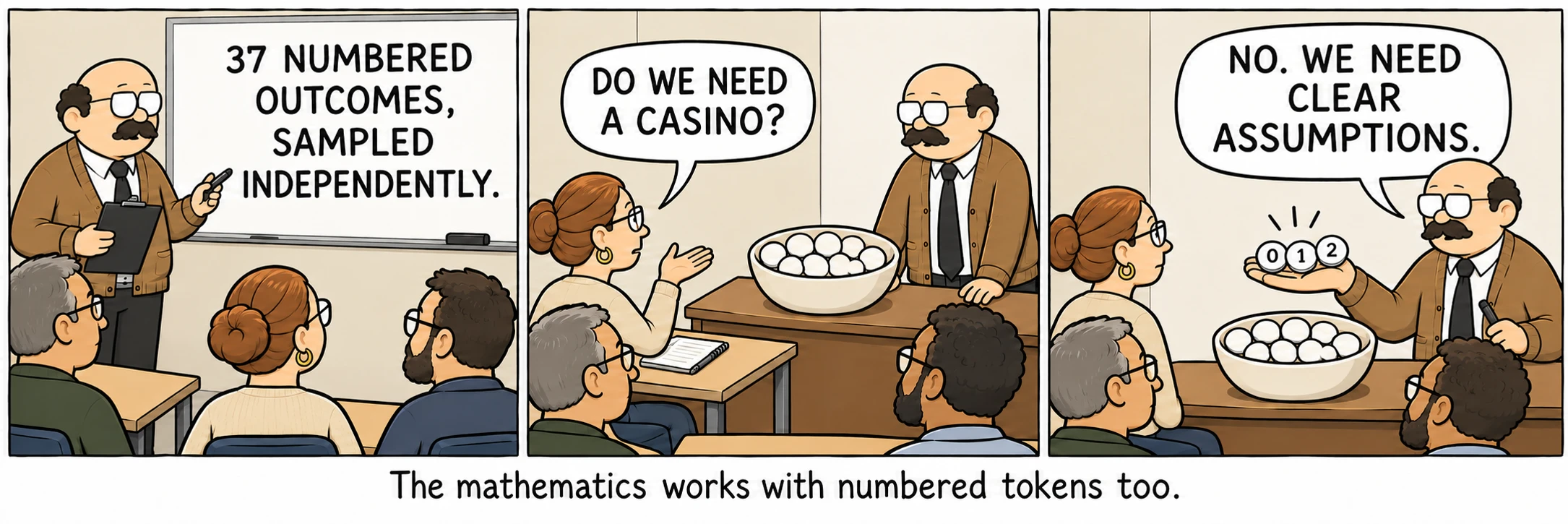
Ivyavuyemwo mirongo itatu n'indwi, inyungu ya kazino imwe, imyaka amajana abiri y'amakosa yo kwigirako.
Aho Twakuye
- Feller, W. An Introduction to Probability Theory and Its Applications, Vol. 1.
- Ethier, S. N. The Doctrine of Chances: Probabilistic Aspects of Gambling.